



Pressure Cookers
Showing 1 - 16 of 25 item(s)

2L+3L+5L Aluminium Cooker Combo
Heat-Resistant Handle | Even Heating
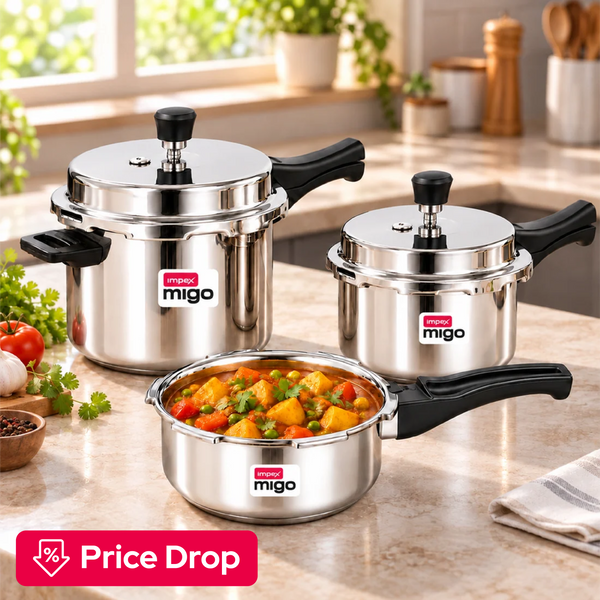
2L+3L+5L Stainless Steel Cooker Set
Even-Heat Sandwich Base

3L Stainless Steel Handi Cooker
Induction & Gas Safe | Triple Safety
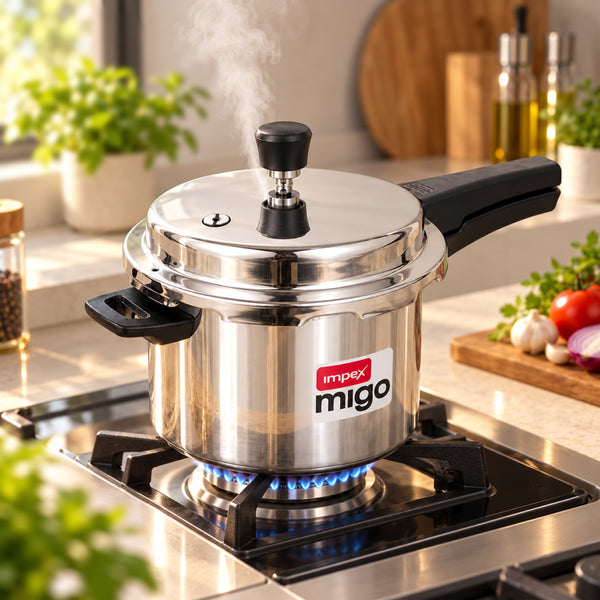
3L Aluminium Induction Pressure Cooker
Anti-Bulging Cooker Base
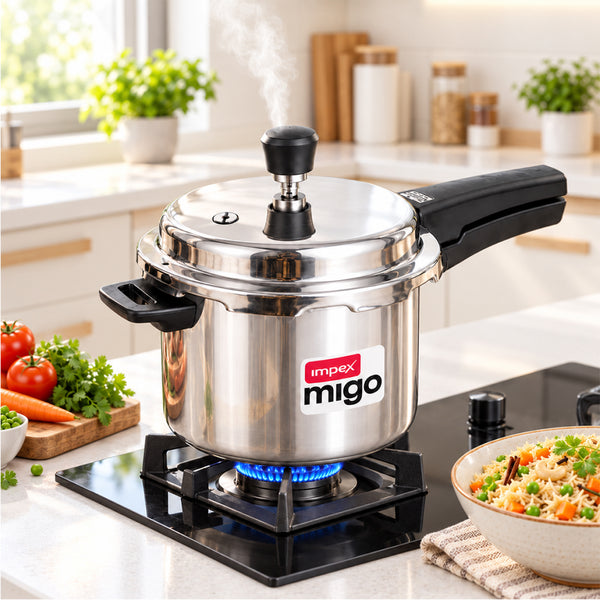
5L Aluminium Induction Pressure Cooker
Anti-Bulging Cooker Base
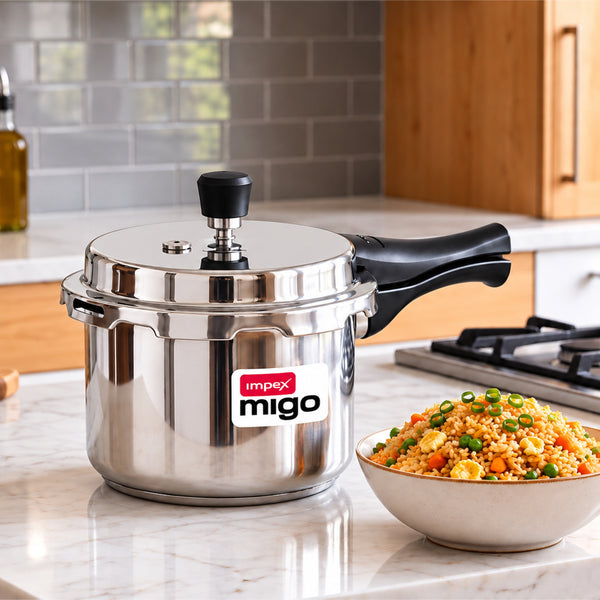
3L SS Induction Pressure Cooker
Even-Heat Sandwich Base | Easy to Clean
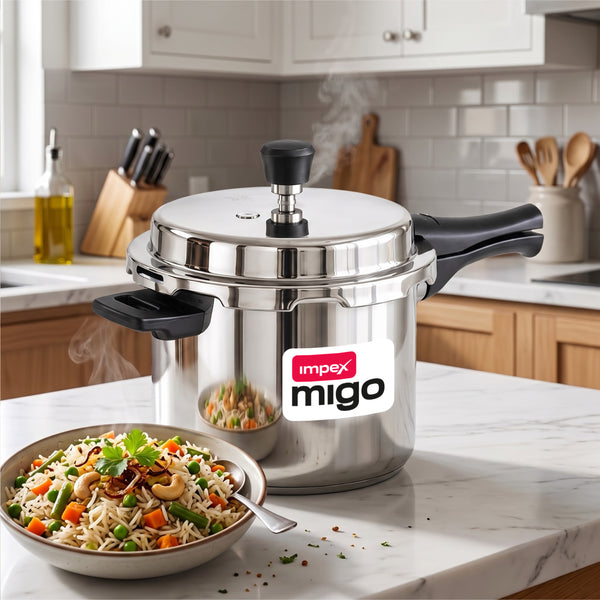
5L SS Induction Pressure Cooker
Even-Heat Sandwich Base | Easy to Clean
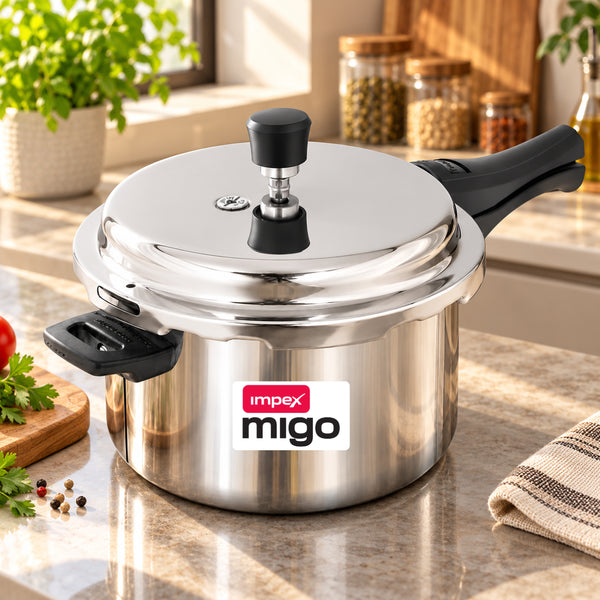
5L Triply SS Induction Pressure Cooker
Cool-Touch Handle | Dishwasher Safe
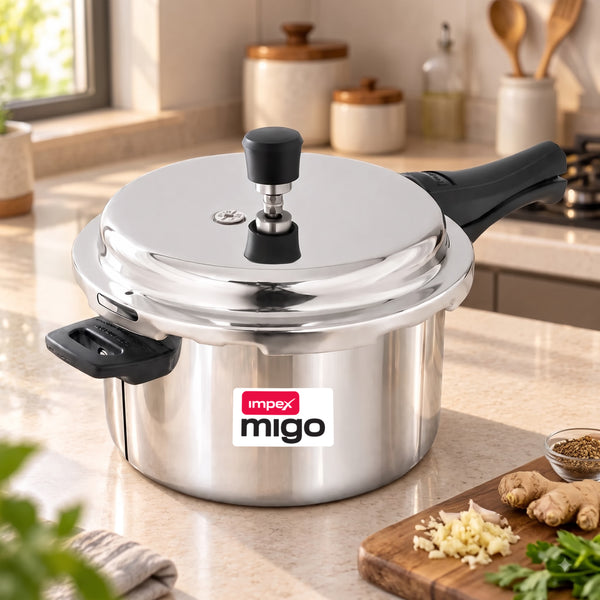
3L Triply SS Induction Pressure Cooker
Gas Stove Compatible | Cool-Touch Handle
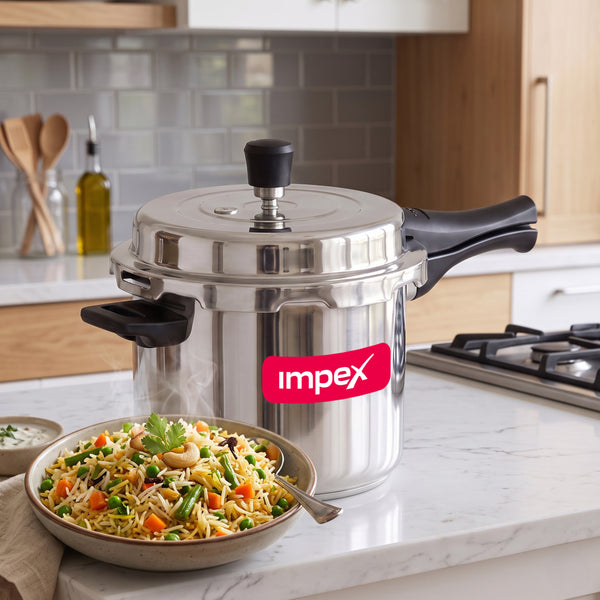
3L SS Induction Pressure Cooker
Even-Heat Sandwich Base | Safety Valve
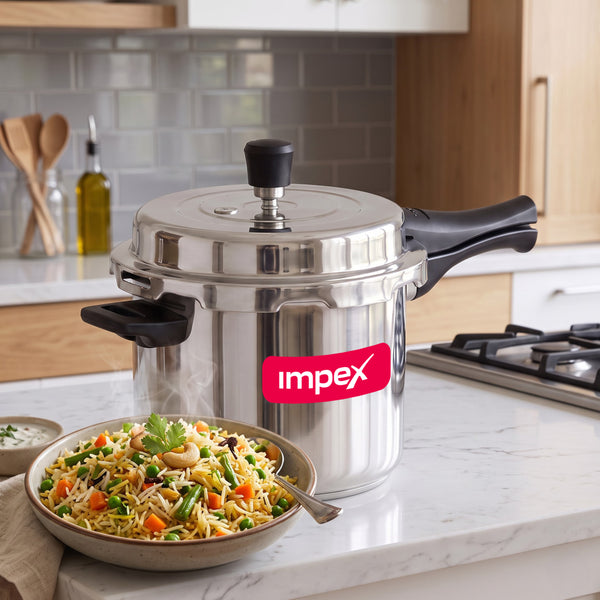
5L SS Induction Pressure Cooker
Even-Heat Sandwich Base | Safety Valve
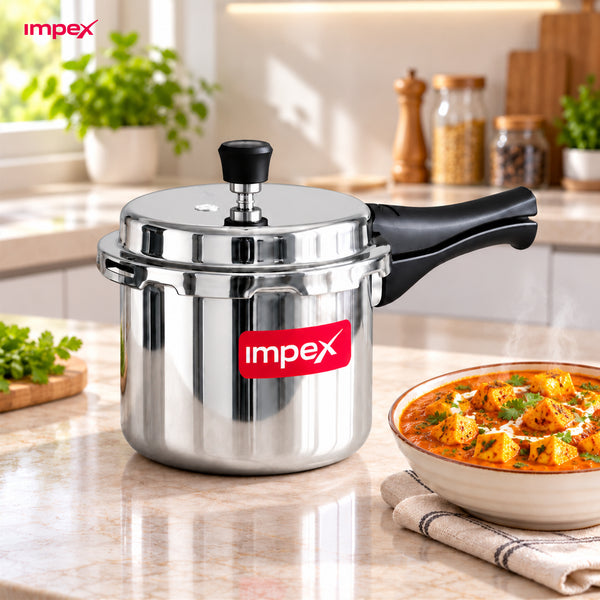
3L Aluminium Outer Lid Pressure Cooker
Even Heating | Induction Compatible
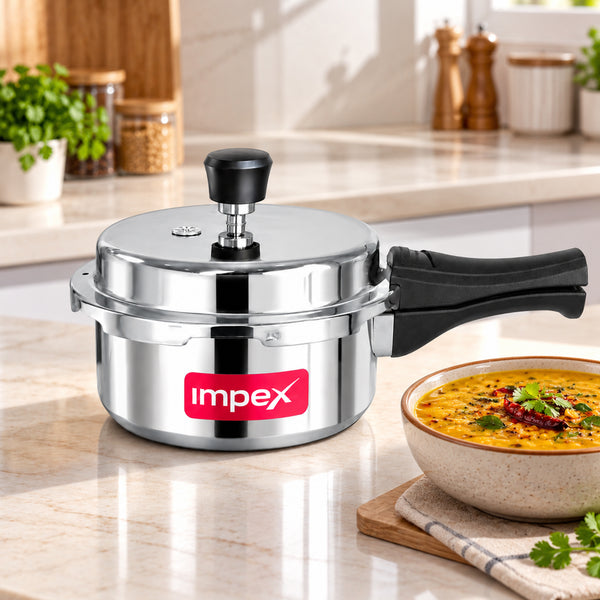
2L Aluminium Induction Pressure Cooker
Virgin Aluminium Body | Even Heating
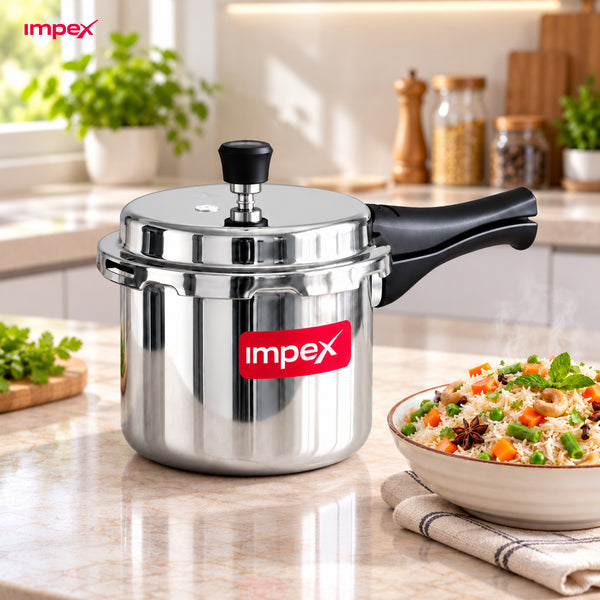
3L Aluminium Induction Pressure Cooker
Virgin Aluminium Body | Even Heating
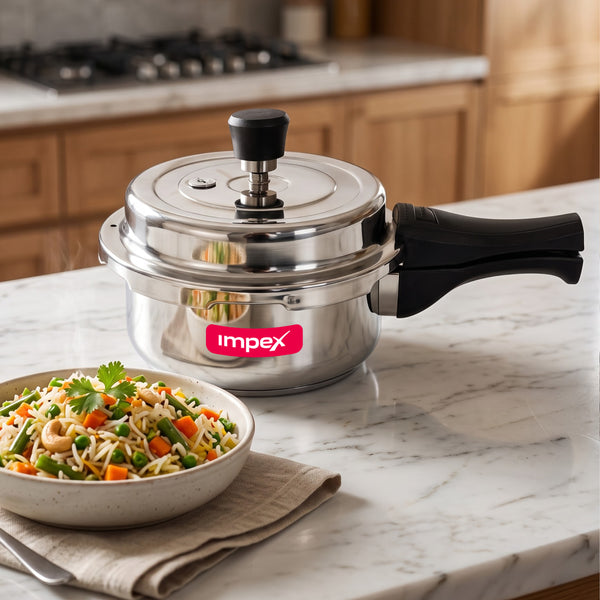
2L SS Induction Pressure Cooker
Energy Efficient Operation
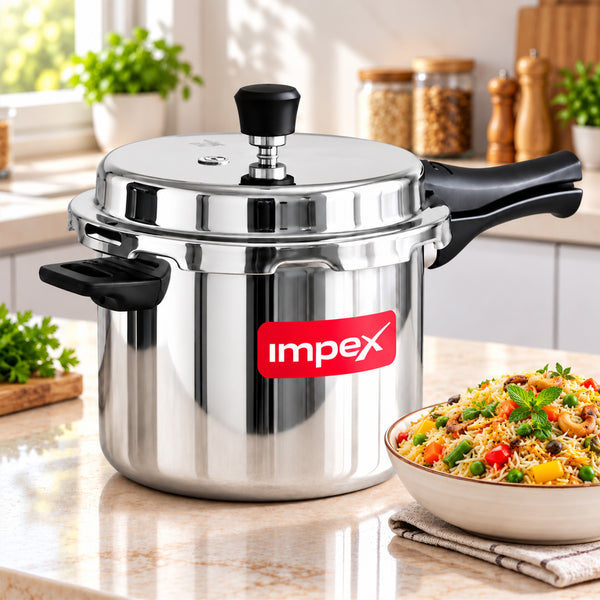
5L Aluminium Outer Lid Pressure Cooker
Virgin Aluminium Body | Even Heating

Customer Support
Mon - Sat, 9am to 5pm

Easy Returns
in 7 Days

Sustainable Product
Made with Care

Quality Assurance
Tested by experts
FAQs
Common Questions
Can not find an answer? Contact our support team at support impexstore@kcmtechnologies.com or call 9633112211
What are the different types of pressure cookers by material, and which should I choose?
Pressure cookers are commonly available in Virgin Aluminium, Stainless Steel with a sandwich bottom, and Tri-ply Stainless Steel. Aluminium cookers are lightweight, budget-friendly, and heat up fast; sandwich-bottom stainless steel cookers resist rust and acidic food reactions; and tri-ply cookers offer uniform 360-degree heating from base to rim.
What pressure cooker capacity size should I choose for my family?
A 2-litre cooker suits individuals, couples, or baby food portions; a 3-litre cooker is ideal for small families of 2 to 3 people; 5-litre and 7-litre cookers fit medium-to-large families of 4 to 7 members; and a 10-litre cooker is best for large joint families or festive batch cooking.
What is the difference between inner lid and outer lid pressure cookers?
Outer lid cookers lock over the outside rim of the pot, offering maximum internal cooking space and easy lid placement. Inner lid cookers fit inside the rim so internal steam pressure reinforces the seal, making them especially popular for direct rice, dal, and lentil cooking.
How do I know if a pressure cooker is compatible with both induction cooktops and gas stoves?
Look for a magnetic induction base or sandwich bottom on the cooker. Stainless steel, tri-ply, and induction-base aluminium cookers work on both gas and induction stoves, whereas traditional plain aluminium cookers are meant for gas burners only.
What safety features should a reliable pressure cooker have?
Essential safety features include a precision-calibrated pressure regulator (whistle), a secondary safety relief valve, heat-proof Bakelite handles that stay cool, a food-grade rubber gasket, an anti-bulging base, and ISI certification.
What are the core parameters to check before buying a pressure cooker?
Check the body material (aluminium, stainless steel, or tri-ply), capacity in litres, lid type (inner vs. outer), stove compatibility (gas vs. induction), base thickness, safety certifications, and warranty coverage.
When is it worth buying a multi-cooker combo set instead of a single pressure cooker?
A 3-in-1 combo set (such as 2L, 3L, and 5L cookers) is ideal when setting up a new kitchen or cooking multiple dishes at once, as it gives you the right size for small sides, daily curries, and large meals at a better overall value.
How can I maintain a pressure cooker for safe, long-term use?
Clean the vent tube and pressure regulator after every use to prevent blockages, wash the rubber gasket gently and replace it when it hardens, and avoid overheating an empty cooker to protect the base.
