



Shop Tawa
Showing 18 of 18 products

 Sort: Featured
Showing 13 - 18 of 18 item(s)
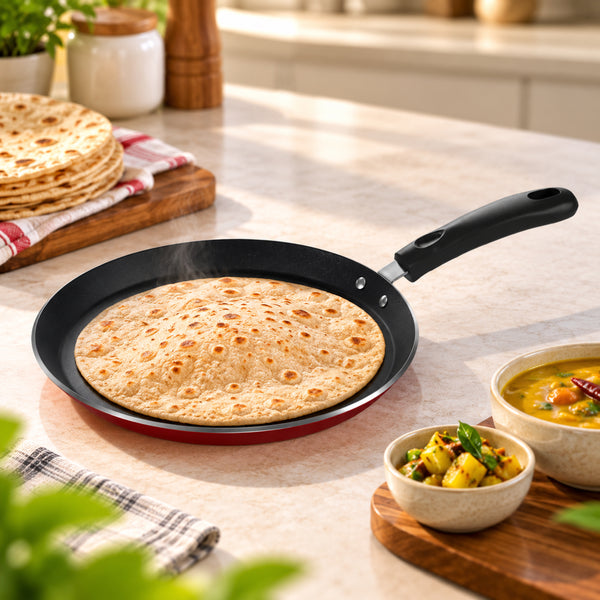
28cm Nonstick Induction Tawa - Maroon
PFOA-Free | Heat-Resistant Handle
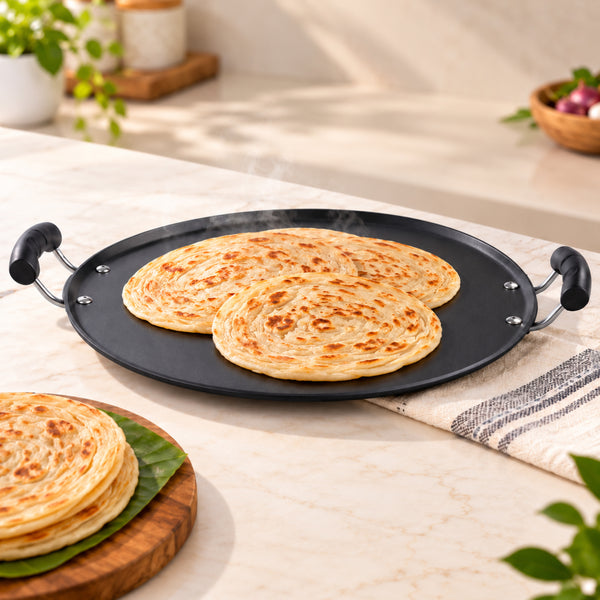
Nonstick Induction Pathiri Tawa
3-Layer Nonstick Coating
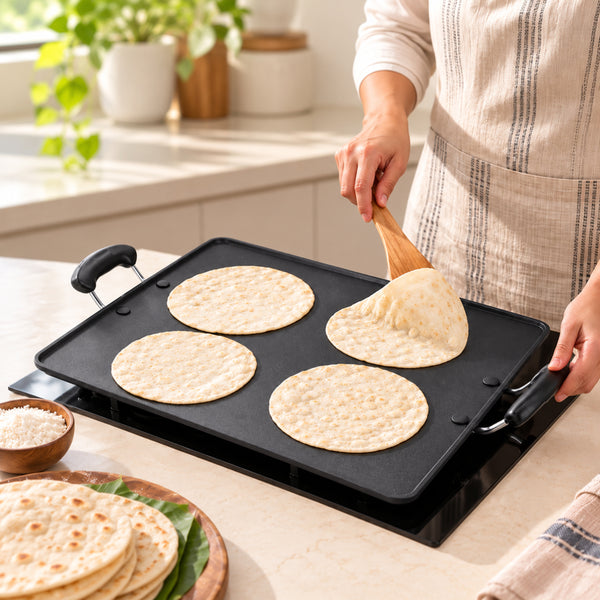
Nonstick Induction Pathiri Tawa
3-Layer Nonstick Coating

28cm Granite Nonstick Induction Tawa
PFOA-Free | Low-Oil Cooking
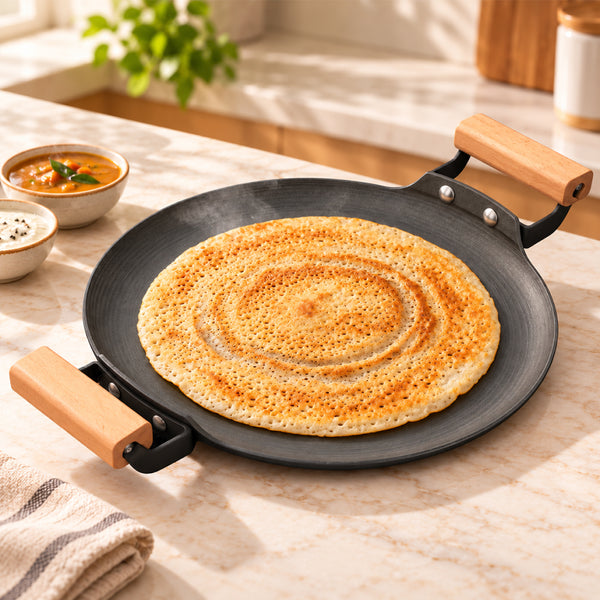
Pre-Seasoned Cast Iron Dosa Tawa
Gas & Induction Safe | Low-Oil Cooking

26cm Granite Nonstick Induction Tawa
Chrome-Plated Sturdy Handle
Showing 18 of 18 products
 Customer SupportMon - Sat, 9am to 5pm
 Easy Returnsin 7 Days
 Sustainable ProductMade with Care
 Quality AssuranceTested by experts
FAQs
Common Questions
Can not find an answer? Contact our support team at support impexstore@kcmtechnologies.com or call 9072612379
What is the difference between round tawas and large square or rectangular tawas?
Round tawas (typically 24 cm to 36 cm) are classic pans suited for everyday dosas, rotis, chapatis, and eggs. Large square or rectangular tawas provide an expanded flat surface area so you can cook multiple rotis at once or make oversized dosas and parottas.
What is the difference between classic non-stick, granite, and ceramic tawas?
Classic non-stick tawas use a 3-layer PFOA-free coating for smooth batter spreading and easy flipping. Granite tawas feature a tougher 5-layer coating for higher scratch resistance. Ceramic tawas use a natural silica coating that is 100% PTFE- and PFOA-free for low-oil cooking.
What makes a Pathiri tawa special for regional flatbreads?
Pathiri tawas feature oversized flat cooking surfaces, heavy-gauge aluminium bodies for uniform heat without hotspots, smooth non-stick coatings, and riveted heat-resistant handles—making it easy to cook delicate rice pathiris, chapatis, and parottas evenly.
Can I use non-stick and granite tawas on induction cooktops as well as gas stoves?
Most modern tawas include a magnetic induction base for compatibility with induction, gas, and electric cooktops. However, some extra-large rectangular tawas are built exclusively for gas stoves, so always verify induction support before buying.
Why does base thickness matter when choosing a tawa?
A thicker heavy-gauge base (such as 3mm to 5mm) resists warping under repeated high heat, eliminates hotspots, and ensures even browning across dosas and rotis over years of daily use.
What handle types and safety features should you look for in a tawa?
Look for heat-resistant, cool-touch Bakelite handles that protect your hands from burns, and sturdy stainless steel rivets—especially on large heavy-duty tawas—so the handle stays firm and wobble-free.
What core parameters should I check before buying a tawa?
Check the diameter or dimensions, shape (round vs. square/rectangular), base thickness, coating type (non-stick, granite, or ceramic), induction compatibility, and handle rivet strength.
How should I clean and care for a non-stick or ceramic tawa?
Let the tawa cool down before washing with a soft sponge and mild soap. Avoid overheating an empty tawa on high flame and use wooden or silicone spatulas to preserve the cooking surface.
